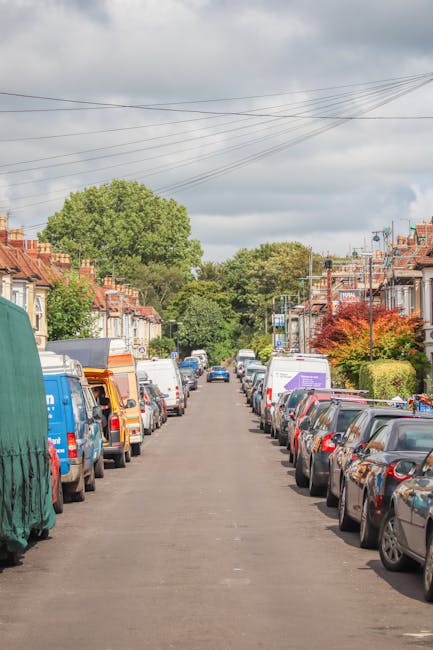
SE11 Removals Guide: Best Parking and Street Access Tips for a Smoother Move
If you are planning a move in SE11, the parking and street access side of the day can make or break everything. A perfectly packed van still slows down if it cannot stop legally, or if the front door is tucked behind a tight terrace, a one-way street, or a row of resident bays that look full by 8.30 in the morning. This SE11 removals guide best parking and street access tips article is here to help you avoid that last-minute scramble. We will look at how local access works, what usually goes wrong, and the simple steps that make loading quicker, safer, and a lot less stressful.
Truth be told, most moving-day headaches are not dramatic. They are the small ones: nowhere to pull in, a steep stairwell, a van that is just a touch too large, a neighbour's delivery vehicle sitting exactly where you need to be. That is why a bit of street planning matters so much. It saves time, keeps the move calmer, and helps everyone work properly.
For readers comparing removal options, it can also help to understand the wider service picture. If your move needs packing support or storage as part of the job, pages like packing services and removals and storage can give you a clearer sense of what is available before moving day arrives.
Quick takeaway: in SE11, the best removal day is usually the one where the parking plan is sorted before the boxes are even taped shut.
Table of Contents
- Why parking and street access matter in SE11
- How SE11 removals parking and access planning works
- Key benefits and practical advantages
- Who this is for and when it makes sense
- Step-by-step guidance for a smoother move
- Expert tips for better results
- Common mistakes to avoid
- Tools, resources and recommendations
- Law, compliance, standards and best practice
- Options, methods and comparison table
- Case study or real-world example
- Practical checklist
- Conclusion
- Frequently asked questions
Why SE11 removals guide best parking and street access tips Matters
SE11 has a very specific feel to it. You get a mix of residential roads, terraces, flats, controlled parking areas, and streets where the available stopping space can change from one hour to the next. That makes access planning more than a nice extra. It is part of the move itself.
A removal team that can park sensibly near the property can work faster, carry safely, and reduce the chance of damage. If the van ends up a long way from the front door, every extra metre becomes another lift. That means more fatigue, more time, and more risk around awkward items like wardrobes, mattresses, or the inevitable box of oddly shaped kitchen bits nobody wants to admit they packed last night.
In a neighbourhood like SE11, street access also affects timing. One blocked bay can set everything back. A narrow road can limit the size of vehicle that makes sense. A busy morning slot near shops, schools, or commuter routes can mean more competition for kerb space. None of this is unusual, but it does need a plan.
The other reason it matters is courtesy. Neighbours notice vans, lifts, and noise. If the access is handled neatly, there is less disruption, less apologising, and a better chance of staying on good terms with the people who live around you. That part is not glamorous, but it matters. Let's face it, nobody wants to start a new chapter by annoying the whole street.
How SE11 removals guide best parking and street access tips Works
The basic idea is simple: decide where the removal vehicle can stop, how the team will reach the property, and what could slow them down before moving day begins. Good access planning usually combines a few things:
- checking the street layout and direction of traffic
- looking at resident bays, pay-and-display bays, loading spaces, and any restrictions
- measuring whether the van can sit close enough for efficient loading
- thinking about stairs, entryways, front gardens, and communal hallways
- choosing the right size of vehicle for the street and the volume of items
For some moves, the best answer is a standard van parked right outside or as close as possible. For others, a smaller vehicle is the smarter choice because the street is tight and turning space is limited. That is why services such as man and van can be useful for smaller or more awkward SE11 moves, while house removals is often a better fit for larger household jobs that need more structured planning.
Good removals teams do not just turn up and hope for the best. They usually ask for address details, look at likely access pinch points, and work out how long loading might take. If the property is in a flat, they may also ask whether there is a lift, whether the stairwell is narrow, and whether parking sits at the front, back, or around a corner. The details sound small, but they decide how smooth the day feels.
Key Benefits and Practical Advantages
Sorting parking and street access properly gives you more than convenience. It changes the whole tone of the move.
1. Faster loading and unloading
The closer the van is to the property, the fewer trips the team needs to make. That reduces the time boxes spend outside and lowers the chance of scuffs, knocks, or weather damage. In drizzle, which is always lurking somewhere in London, this becomes even more obvious.
2. Better protection for your belongings
Long carries through a street, across uneven kerbs, or down a cramped hallway increase the chance of bumping furniture. A tidy parking setup makes handling easier and safer. That is especially important for large or fragile items.
3. Less stress on moving day
People underestimate how much peace of mind comes from seeing the van in the right place. Once access is sorted, the move feels manageable. The team can focus on the job instead of improvising, and you can focus on the house keys, utilities, and the million other things that always seem urgent at once.
4. Lower risk of parking disputes
If your plan respects local restrictions and the practical flow of the street, you are less likely to end up with complaints, tickets, or awkward conversations with neighbours. Nobody enjoys that sort of start.
5. Better value from your removal quote
Time is money in removals. When parking is sorted, quoted hours are easier to predict and the job is less likely to drift. If you are comparing costs, this is one of the reasons why clear access information matters when discussing pricing and quotes.
| Access situation | What usually happens | Best practical response |
|---|---|---|
| Van can park outside or very close | Fast loading, fewer carries, less disruption | Confirm time slot and keep entry clear |
| Restricted street with resident bays | May need careful timing or a smaller vehicle | Plan parking early and check alternatives |
| Flat with narrow stairs | Longer loading time, more handling care needed | Use extra protection and allow more time |
| Busy one-way road | Stopping may be awkward or brief | Choose a realistic bay and avoid guesswork |
| Rear access only | May be good if clear, but difficult if blocked | Check gates, key access, and width in advance |
Who This Is For and When It Makes Sense
This guidance is for anyone moving in SE11 who does not want parking to become the main event. That includes:
- homeowners moving house
- tenants leaving a flat or maisonette
- students moving between terms or shared homes
- landlords arranging tenant changes
- small businesses moving stock, files, or office furniture
- people using storage as part of a staged move
If you are moving a single sofa, a few boxes, or a whole family home, access still matters. The scale changes, but the principle does not. Smaller jobs often benefit from flexible handling, which is where small removals can make sense. Bigger moves may need flat removals or even office removals if the move includes desks, storage cabinets, or equipment.
This also makes sense if you are moving on a tight schedule. A same-day handover, a lease deadline, or a key collection window can leave very little room for parking mistakes. In that situation, access planning is not just useful; it is the difference between calm progress and a lot of circling around the block.
Step-by-Step Guidance
If you want the practical version, here it is. Keep it simple and work through these steps before moving day.
1. Identify the exact access point
Do not assume the front door is the best route. Check whether the property has rear access, a side entrance, a courtyard, or a shared hallway. In some SE11 streets, the quickest loading point is not the one you first notice.
2. Measure the obvious pinch points
Note narrow gates, steps, low arches, tight stair turns, and any awkward corners inside the building. If you know a wardrobe will not make the bend on the landing, that is better to know on Tuesday than at 8.15 on moving day.
3. Check parking rules and likely restrictions
Look at the street for residents' bays, loading restrictions, yellow lines, pay-and-display bays, and permit requirements. You do not need to be a parking expert. You just need to avoid assumptions.
4. Match the vehicle to the street
A larger van might be efficient on paper but useless if it cannot safely stop where needed. A smaller van or split load can sometimes be the smarter choice. If the move is likely to involve multiple trips, factor that into the plan rather than treating it like a surprise later.
5. Tell the removals team what they need to know
Share the access details early. Mention stairs, lift size, permit restrictions, likely parking distances, and whether you are in a busy road. The more practical the brief, the less guesswork on the day.
6. Clear the walking route
Inside and out, the route should be as open as possible. Move bikes, bins, potted plants, mats, and anything else that creates a snag. If the day is wet, consider a towel or runner to reduce slips at the threshold.
7. Build in a bit of time
Always give yourself more room than you think you need. A moving day rarely becomes quicker than expected, but it very often becomes slightly more complicated. That is just how these things go.
Expert Tips for Better Results
Here are the details that experienced movers tend to notice first.
Use the street at the right time of day
In SE11, morning and early afternoon can feel very different from one another. A street that is fairly calm at 10.30 may be much busier later on. If you have any flexibility, aim for the time slot that gives you the cleanest parking window and the least local traffic pressure.
Think about the van's angle, not just the bay
Sometimes there is a space available, but the vehicle needs to angle awkwardly to make use of it. That can work, but only if the driver has enough room to manoeuvre. A bay that looks generous from the pavement can still be tricky once you factor in turning space.
Watch for hidden obstacles
Bins, low walls, planters, and resident-only bollards can cause trouble if they are overlooked. So can a slightly sloping road or a narrow pavement edge. Small things. Big irritation.
Keep the heavy items closest to the exit
If you are staging boxes yourself, place bulky furniture and heavier items near the easiest route out. You do not want the removal team weaving around fragile crockery just to reach the sofa first. That sounds obvious, and yet people forget it all the time.
Consider partial pre-move storage
If parking will be difficult and your move-out date is messy, a short staging plan can help. Furniture or non-essential boxes can go into short-term storage or secure storage so moving day is less crowded and easier to manage. For longer transitions, long-term storage may be more appropriate.
Speak plainly about access challenges
Do not downplay the awkward bits. If the street is tight, say so. If parking is a pain after 9 a.m., say that too. Straight answers help create a real plan, not an optimistic one.
Common Mistakes to Avoid
A lot of moving-day stress comes from a handful of predictable mistakes. The good news? They are avoidable.
- Assuming there will be a space: streets fill quickly, especially on busy residential roads.
- Not measuring stairs or doorways: a sofa that looks fine in the room can still be a nightmare on the landing.
- Choosing the biggest van by default: bigger is not always better if the road is narrow.
- Ignoring timing rules: some loading opportunities are brief, and moving too late can make them disappear.
- Forgetting to tell the neighbours: a quick heads-up can prevent avoidable friction.
- Leaving packed boxes in the access route: this slows everyone down and creates trip hazards.
- Not planning for wet weather: even a light shower can make cardboard soft and floors slippery.
One especially common issue in SE11 is underestimating how long the first ten metres take. The van may be close, but if the door, hallway, or communal entrance is awkward, loading still slows down. It is a funny little trick of removals: the distance feels short, yet the job feels long.
Tools, Resources and Recommendations
You do not need specialist equipment for every move, but a few simple tools can make access issues far less painful.
- Measuring tape: useful for doors, stair widths, and furniture checks
- Sticky notes or labels: helpful if boxes need to be staged by exit point
- Furniture blankets and straps: reduce knocks when navigating tight spaces
- Trolley or sack barrow: useful when the van cannot sit directly outside
- Phone torch: handy for dim stairwells, cellars, or rear access routes
- Bin bags and cleaning cloths: surprisingly useful for last-minute mess, wet shoes, or dusty corners
For packing support, packing services can be a sensible choice if you want fewer loose items on the morning of the move. If you are comparing vehicle styles or move size, the wider removals service page may also help you understand the options. And if you are planning a local move within the area, local removals is a useful place to look for a move that stays close to home.
A practical tip from experience: make one person responsible for access information. Not every detail needs to go through five different family members or colleagues. That is how half the instructions get lost and the other half get repeated with slight changes. Not ideal.
Law, Compliance, Standards and Best Practice
Moving in SE11 means thinking carefully about parking, road use, and safety. You do not need to become a transport planner, but you should respect local restrictions and common-sense safety standards.
As a rule, follow the signs and any local parking controls shown on the street. If a bay is for residents only, loading only, or limited to certain times, plan around that rather than hoping for a grey area. Councils may enforce these restrictions, and a poorly placed van can create problems for you and everyone else trying to use the road.
There is also a safety side. Removal teams should handle lifting properly, keep walkways clear, and protect fragile items during carry-outs. Good practice includes using enough people for heavy items, avoiding rushed lifts on stairs, and keeping access routes clear of clutter. If you want to understand the company's approach to risk and working safely, the health and safety policy and insurance and safety information are worth a look.
If you are moving business goods, documents, or office equipment, compliance matters a bit more because the stakes are higher. Confidential files, hardware, and furniture all need careful handling. In those cases, document storage and office storage can support a more controlled transition. For household moves, the same general principle still applies: plan access, protect the property, and avoid forcing the job through a space that is clearly wrong for the vehicle.
Best practice, in plain English, means this: do not guess, do not block, and do not leave safety to chance.
Options, Methods, and Comparison Table
There is more than one way to handle parking and street access in SE11. The right method depends on the street, property type, and volume of items.
| Method | Best for | Pros | Trade-offs |
|---|---|---|---|
| Park directly outside | Clear residential streets and easy access | Fastest loading, least carrying | Not always available |
| Park nearby and use trolleys | Controlled parking streets or short carries | Flexible and often practical | Slower, more handling effort |
| Smaller vehicle | Narrow roads and tight corners | Easier to position, less awkward parking | May need more trips |
| Split load over two runs | Moves with access limits or staged dates | Reduces pressure on one parking slot | Requires careful timing |
| Use storage as a buffer | Moves with delays, overlap, or reduced space | Simplifies access and declutters the move | Extra coordination needed |
For many SE11 households, the winning approach is not a single clever trick. It is a combination: a sensible vehicle, a realistic parking plan, and a clean route from door to van. If the property is smaller or the load is modest, man and van can be a good balance of flexibility and simplicity. If there is more furniture, more risk of stair hassle, or more need for coordination, the broader flat removals or house removals options may be better.
Case Study or Real-World Example
A typical SE11 move might involve a two-bedroom flat on a busy street with resident bays on one side and a narrow entrance hall. The occupants have boxes, a bed frame, a sofa, and a dining table. Nothing outrageous. But if the van is parked too far away, the team ends up making repeated carries down the pavement, around a parked car, and back again. By the time the sofa comes out, everyone is a bit more tired than they expected.
Now imagine the same move with a cleaner plan. The removal team is told in advance that the road tightens near the junction, so a mid-sized van is chosen. A parking space is checked early. The owners have cleared the hallway, labelled the boxes, and kept the largest items near the exit. The load-out is not magically easy, because moves never are, but it is controlled. The sofa comes through without a dramatic scrape against the wall. The table fits on the first try. Nobody is standing in the street wondering where to put the next box.
That is the real difference. Good parking and access planning does not remove all pressure, but it cuts out the avoidable pressure. And in removals, that counts for a lot.
Practical Checklist
Use this checklist a few days before the move, then again on the morning itself.
- Confirm the exact address and access point
- Check whether there are resident bays, loading restrictions, or permit needs
- Measure stairwells, doorways, and any tight turns
- Decide whether a standard van or smaller vehicle is more realistic
- Tell the removals team about lifts, rear access, or shared entrances
- Keep bins, bikes, and clutter away from the route
- Label fragile items clearly
- Protect floors if the weather looks wet
- Let neighbours know if the van may briefly affect the street
- Keep keys, paperwork, and contact numbers close at hand
If your move includes furniture you do not want to take straight away, think about furniture storage or broader household storage so you can avoid overloading the moving day. A less crowded property usually means quicker loading and fewer awkward pauses.
Conclusion
Getting parking and street access right in SE11 is one of those quiet wins that pays off everywhere else. The move feels calmer, the team works faster, and your belongings spend less time being carried through narrow gaps or parked awkwardly on the pavement. That is the kind of planning people rarely praise, but they definitely notice when it is missing.
If you remember one thing from this guide, make it this: treat access planning as part of the move, not an afterthought. Check the road, choose the right vehicle, share the details early, and keep the walking route clear. Simple enough, really. Not always easy, but simple.
If you are still comparing options, take a moment to review the service pages that match your move type, especially if you need packing help, storage, or a smaller vehicle for tricky streets. A little preparation now can save a lot of hassle later, and that is worth doing properly.
Get a free quote today and see how much you can save.
Frequently Asked Questions
What is the best way to plan parking for a removal in SE11?
The best way is to check the street in advance, identify any parking restrictions, and tell your removals team exactly where the van can stop. If the road is narrow or busy, a smaller vehicle or a timed loading plan may work better.
Do I need to reserve parking for a move in Kennington or SE11?
In some cases, yes, but it depends on the street and local rules. At the very least, you should confirm whether your location has resident bays, loading spaces, or permit-controlled parking. Do not assume the street will be free on the day.
What if the removal van cannot park right outside my property?
That is fairly common in SE11. The team may park nearby and use trolleys or make shorter carries. The key is to plan for the extra walking distance so timings stay realistic.
Is a larger van always better for removals?
No. A larger van can be efficient, but if the street is tight, it may be difficult to position safely. In some SE11 roads, a smaller van is actually the smarter choice.
How much does access affect removal costs?
Access can affect cost because it influences time, labour, and vehicle choice. If a van can park close to the door, the move is usually more efficient. Longer carries or awkward access can increase the amount of work involved.
What should I tell the removal company before moving day?
Tell them about parking restrictions, stairwells, lifts, rear access, narrow entrances, and any items that are unusually heavy or awkward. The more precise you are, the better they can plan the job.
Can I use storage if parking or access is difficult?
Yes, and sometimes it is the cleanest solution. Storage can reduce the amount of furniture on the day, which makes loading simpler and can ease pressure on tight SE11 streets.
How early should I think about street access before a move?
Ideally, a few days before the move, and earlier if you are in a flat, on a busy road, or dealing with timed parking. Leaving it to the morning of the move is asking for a headache.
What are the most common access problems in SE11 removals?
The most common problems are tight roads, limited parking, narrow staircases, shared entrances, and vans arriving at the wrong time of day. None of these is unusual, but they all need a bit of planning.
How can I make loading quicker on the day?
Clear the route, label boxes, keep heavy items near the exit, and make sure the van has the best possible stopping position. A tidy entrance and a sensible parking setup make a bigger difference than most people expect.
Are flat moves in SE11 more difficult than house moves?
Not always, but they often involve more access considerations such as stairs, lifts, and communal hallways. That is why flat moves benefit from detailed parking and loading plans.
Where can I find help if I need more than basic removals?
If your move needs extra planning, look at the relevant service options such as packing, storage, local removals, or house removals. Matching the service to the access challenge is usually the most sensible next step.